

Livelihood Restoration for Linear Resettlement
The Unique Challenges in Project Design

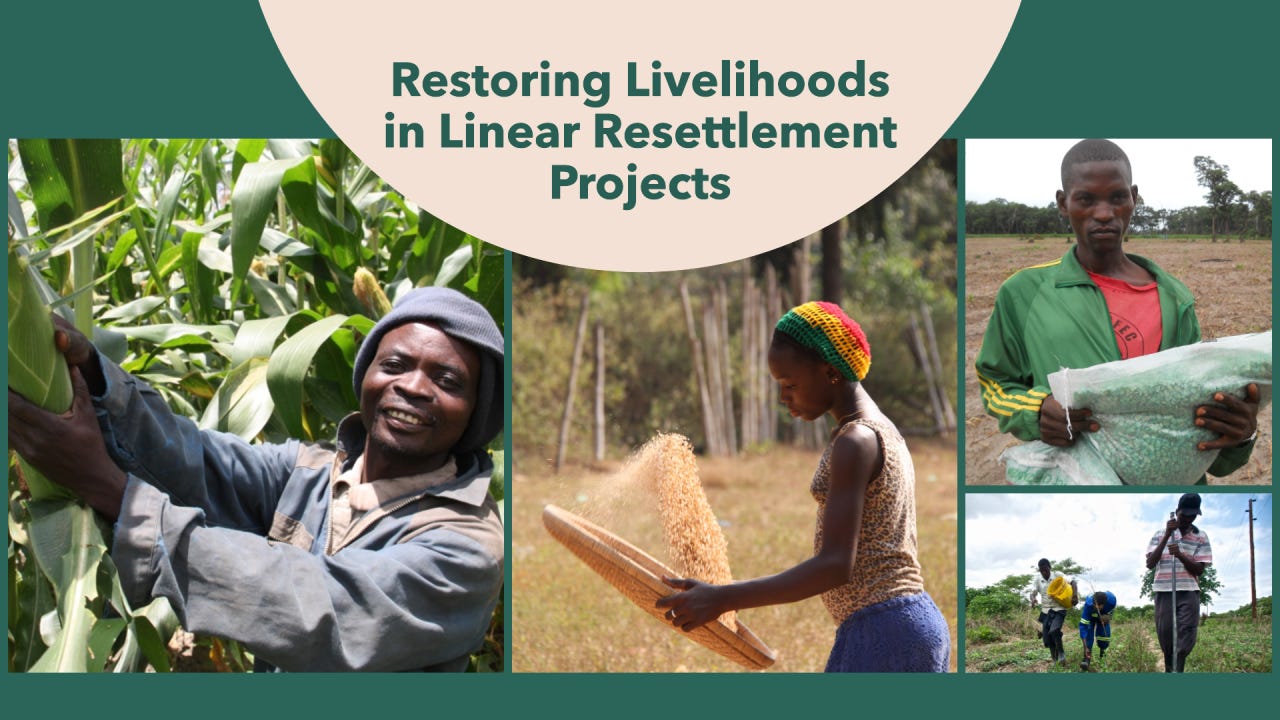
Linear resettlement projects associated with infrastructure such as pipelines, roads, and railway lines present significantly different challenges in delivery compared to nuclear projects like mines, dams, or other single-site displacements. The dispersed and elongated nature of linear projects means they often cut across diverse agro-ecological zones, each with distinct climatic conditions, soil types, and agricultural productivity levels. These variations necessitate livelihood restoration plans that are adaptable to the specific needs of different zones, often requiring interventions tailored to unique local conditions such as irrigated farming, dryland cropping, or pastoral transhumance.
Geographically, linear projects traverse multiple administrative boundaries, ranging from districts to provinces and even crossing national borders. Each administrative unit may have its own regulatory frameworks, governance capacities, and development priorities, which complicates the coordination of resettlement and livelihood restoration efforts. These projects also encounter a spectrum of cultural and linguistic diversity, requiring engagement approaches that are sensitive to the social norms, languages, and traditions of each community along the route.
Land use practices add another layer of complexity. While some communities may rely heavily on sedentary agriculture, others may practice transhumance, moving livestock seasonally in search of pasture and water. This variation demands tailored interventions that address both fixed agricultural systems and mobile, resource-dependent livelihoods. Similarly, the types of land entitlement and ownership encountered in linear projects are often highly variable, ranging from communal and customary tenure systems to privately owned or state-held lands. Each system carries distinct legal and social implications, complicating compensation processes and the design of livelihood restoration packages.
Urban and rural disparities further influence the delivery of resettlement efforts. Urban areas along the project route may require non-agricultural livelihood interventions, such as business training or vocational skills development, while rural zones might prioritize agricultural intensification, livestock improvement, or access to natural resources. These asymmetries are compounded by uneven access to resources such as fertile land, water, and infrastructure, creating further challenges in designing equitable solutions.
Linear projects also require addressing the competing needs of agricultural and transhumance livelihoods. Agricultural communities may need interventions such as improved irrigation, inputs, and post-harvest processing, while transhumant groups may require access to grazing corridors, water points, and veterinary services. The spatial disconnection between affected households, the diversity of livelihoods, and the complexity of resource allocation demand an integrated and highly localized approach.
Unlike nuclear projects, where impacts are concentrated in a single area, linear projects affect scattered communities with varied socio-economic profiles. This necessitates a decentralized and highly participatory approach to planning and implementation, ensuring that interventions are context-specific and inclusive. Furthermore, the elongated timeline and geographic spread of linear projects often make monitoring and evaluation more challenging, requiring robust systems to track impacts across different regions and populations.
Livelihood Restoration Plans (LRPs) are critical for mitigating the adverse socio-economic impacts of linear infrastructure projects, especially where land acquisition disrupts the livelihoods of Project Affected Households (PAHs). The primary goal of an LRP is to restore or improve the production, income-earning capacity, living standards, and overall livelihoods of displaced households to pre-project levels or better.
Key Objectives:
Restoration and Improvement: Ensure that displaced families’ livelihoods are restored or improved, where compensation alone is insufficient to guarantee sustainable outcomes.
Feasible and Sustainable Solutions: Provide tailored livelihood restoration packages that address the unique needs and circumstances of each PAH.
Optimizing Monetary Compensation: Equip PAHs with the knowledge and mechanisms to utilize monetary compensation effectively for long-term benefits.
Promoting Self-Reliance: Foster socio-economic empowerment and resilience to reduce dependence on external support.
Participatory Planning: Ensure meaningful consultation, informed participation, and consent from all affected households during the planning and implementation process.
Overarching Principles of Livelihood Restoration
Effective LRPs are grounded in a set of guiding principles that address the complexity and sensitivity of restoring livelihoods:
Additionality: Interventions should mitigate opportunity costs and add value beyond mere compensation.
Sustainability: “Future-proof” households against potential socio-economic and environmental changes.
Localized Adaptation: Tailor interventions to the specific needs of households, communities, and regions.
Participatory Approach: Engage PAHs and stakeholders in a transparent, inclusive, and meaningful manner.
Vulnerability Focus: Prioritize support for vulnerable groups, including women, youth, and marginalized households.
Gender Appropriateness: Address gender disparities in access to resources, skills, and opportunities.
Integration: Align interventions with government policies, development plans, and multi-sectoral partnerships to ensure continuity and resilience.
Capacity Building: Strengthen the skills and resources of PAHs to enable long-term self-reliance.
Monitoring and Evaluation: Establish measurable indicators to track the success and outcomes of interventions.
Mitigating Resource-Based Conflict
Compensation provided to individual PAHs can inadvertently create social disruptions, including inter- and intra-family resource-based conflicts. Vulnerability linked to gender, generational differences, and resource access disparities further exacerbates these challenges.
Key Strategies to Mitigate Conflict:
Provide training and guidance to PAHs on utilizing compensation effectively.
Focus on livelihoods restoration as a family-oriented intervention, fostering unity and shared goals within households.
Collaborate closely with government agencies to address “social engineering” aspects of livelihoods restoration.
Participatory Integration with Government
Successful LRPs require close collaboration with government stakeholders at all levels. This ensures that interventions are aligned with district and national development plans and integrated into existing policies and programs.
Key Elements of Participatory Integration:
Alignment with Policies: Ensure interventions align with government development frameworks and agro-economic zones.
Nested Programs: Embed restoration activities within broader government programs to avoid “orphaned” initiatives.
Resilience and Sustainability: Design transformative interventions that build long-term household resilience.
Planning and Implementation
LRPs differ from standard development programs due to their household-level focus. They require precise planning, careful targeting, and monitoring to ensure effective and measurable outcomes.
Household-Level Planning:
Conduct socio-economic baseline surveys to gather detailed household data.
Develop a matrix of entitlements and interventions tailored to each family.
Aggregate interventions at the community or cluster level for scalability while respecting spatial and cultural diversity.
Track progress using agreed indicators aligned with national development goals and ensure continuous monitoring and evaluation.
Addressing Livelihood Complexity
Restoring livelihoods in rural, agriculture-based settings involves addressing a multitude of challenges, including land availability, seasonal rainfall, labor shortages, and access to resources.
Key Interventions for Land-Based Livelihoods:
Intensification and diversification of agricultural activities.
Increasing crop yields through improved inputs, irrigation, and land management.
Agroforestry for fuelwood, timber, and soil enrichment.
Enhancing post-harvest skills and technology, including storage and processing.
Developing value chains and market access for small-scale producers.
Agriculture-Based Challenges
Challenges observed during field visits include:
Land scarcity, degradation, and resistance to change.
Gender and generational inequalities in access to land and resources.
Climate change impacts, including falling rainfall and reliance on rain-fed agriculture.
Limited access to markets, improved seeds, mechanization, and post-harvest infrastructure.
Human Capacity Building
Human development is a vital component of LRPs, addressing skills gaps and enhancing employability for PAHs.
Key Interventions for Human Development:
Provide vocational training vouchers to impacted families.
Develop partnerships with credible training institutions along project routes.
Focus on post-training employability and align courses with market demand.
Offer non-institutional training in crafts, catering, tourism, and entrepreneurship.
Support savings and loans programs to enable business development.
In summary, linear resettlement projects in Africa demand a multifaceted and dynamic approach to livelihood restoration. They must address the diverse agro-ecological, cultural, administrative, and livelihood complexities inherent in such projects, ensuring that interventions are equitable, sustainable, and responsive to the unique needs of each community along the route. Planning must incorporate solutions to resource-based conflicts, fostering capacity building, and integrating with national development plans, LRPs can ensure that displaced households achieve long-term socio-economic resilience and empowerment.